


The objective of this guide is to help you choose your duvet in 5 quick and easy steps. Specialized guides will help you explore your choice. Make the right choice and make significant savings thanks to our advice and tips.
1 - CHOOSE THE SIZE
- If you are already equipped with bed linen, be careful to check carefully and choose the same size as your duvet covers. This will save you from having to buy bed linen again.
- If you are not yet equipped with bed linen or have just changed bedding, we advise you to refer to the duvet size guide below.
| Bed dimensions (cm) | Duvet (cm) | Fallout on both sides |
| Bed 90 x 190 cm | 140 x 200 cm or 200 x 200 cm | 25 to 55cm |
| Bed 120 x 190 cm | 200 x 200 cm | 40cm |
| Bed 140 x 190 cm | 200 x 200 cm or 240 x 220 cm | 30 to 50 cm |
| Bed 160 x 200 cm | 240 x 220 cm or 260 x 240 cm | 40 to 50 cm |
| Bed 180 x 200 cm and beyond | 280 x 240 cm | 50cm |
Tip: the sizes above are the French standard sizes. We do not recommend purchasing different sizes as suitable bed linen will be more expensive and harder to find.
2 - CHOOSE THE HEAT INDEX
On our site, duvets are classified into 4 heat indices (light, temperate, warm, very warm) each of which corresponds to a use and the diathermic power of your duvet, i.e. its ability to retain heat.
So, depending on whether the room is heated or not, whether you are cold or not, wanting warmth or, on the contrary, freshness, you will opt for the heat index that best corresponds to your situation.
| Index | Season | Pictogram | Usage |
| Light | Summer |  |
Ideal for people sensitive to heat, for mild seasons (spring/summer) and for heated rooms > 20 |
| Temperate | Mid season |  |
Ideal for temperate rooms from 17° to 20° |
| Hot | Winter |  |
Ideal for people sensitive to cold or for poorly heated rooms from 14° to 17° |
| Very hot | Winter |  |
Ideal for people very sensitive to cold or for unheated rooms < 14° |
| Modular | 4 seasons |  |
2 duvets to assemble (a light duvet + a temperate duvet) to adapt as desired to the season and the ambient temperature of the room. Suitable for bedrooms from 14° to more than 20° |
Tip: for unheated rooms, you theoretically need one duvet per season. The ideal is then to opt for a “4 seasons” duvet.
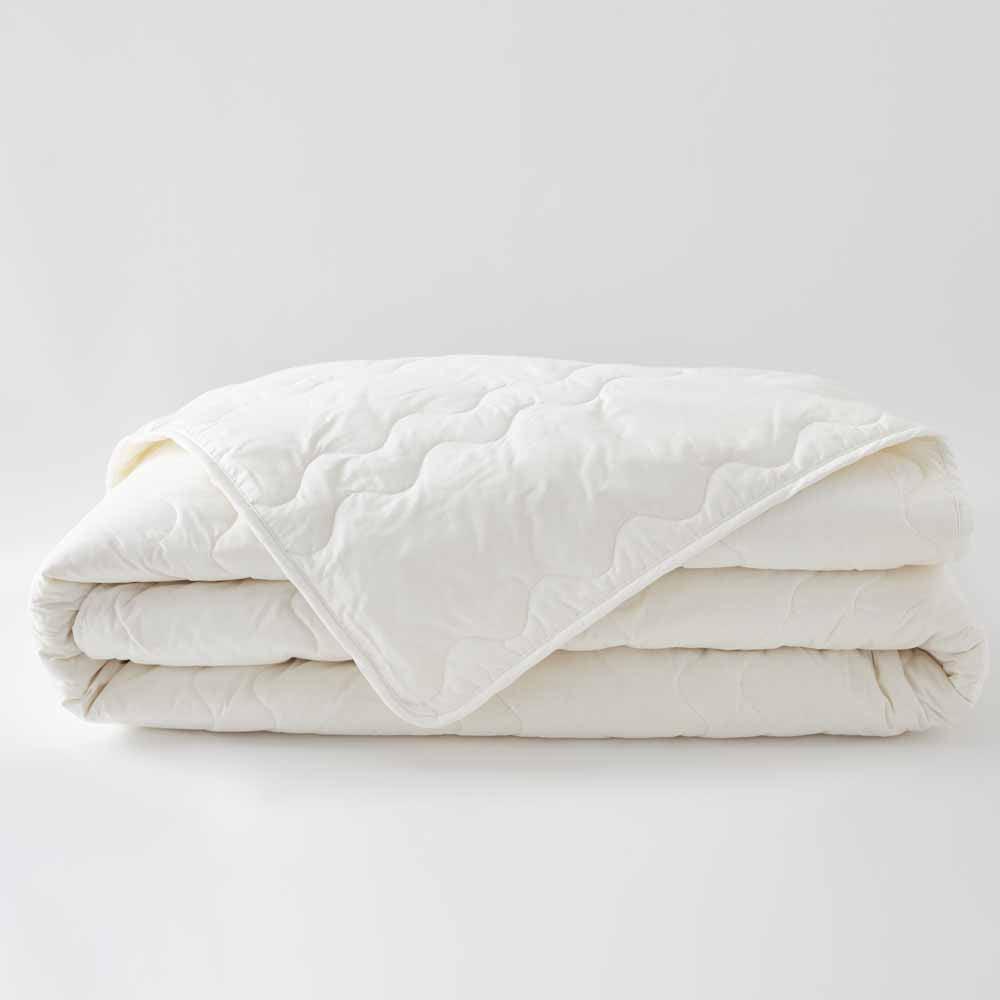
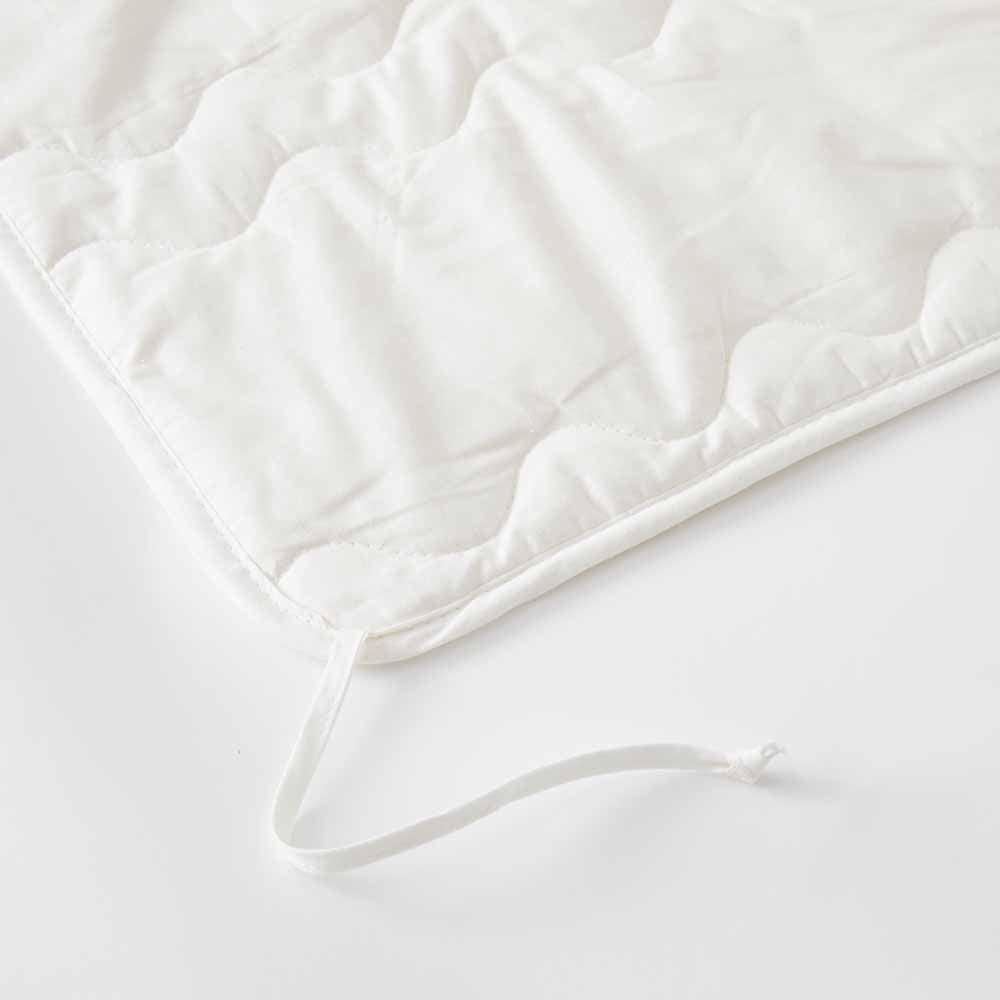
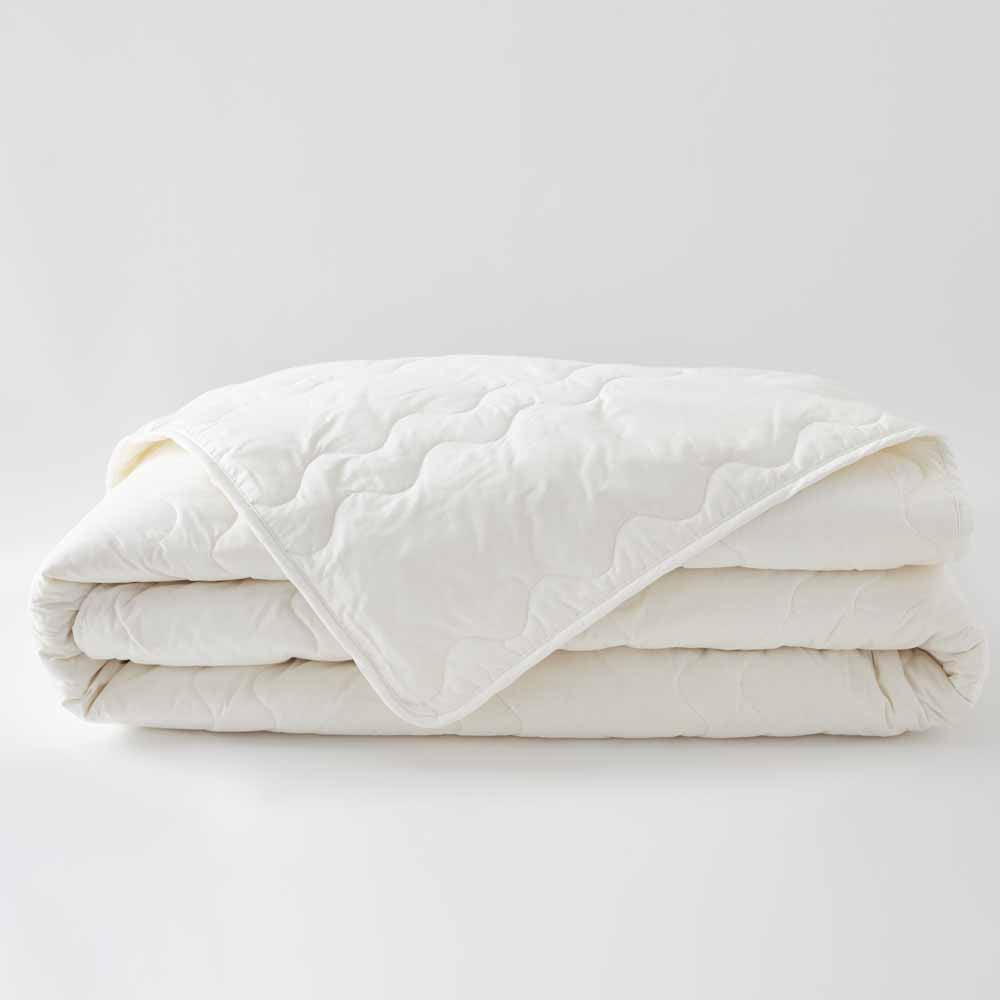
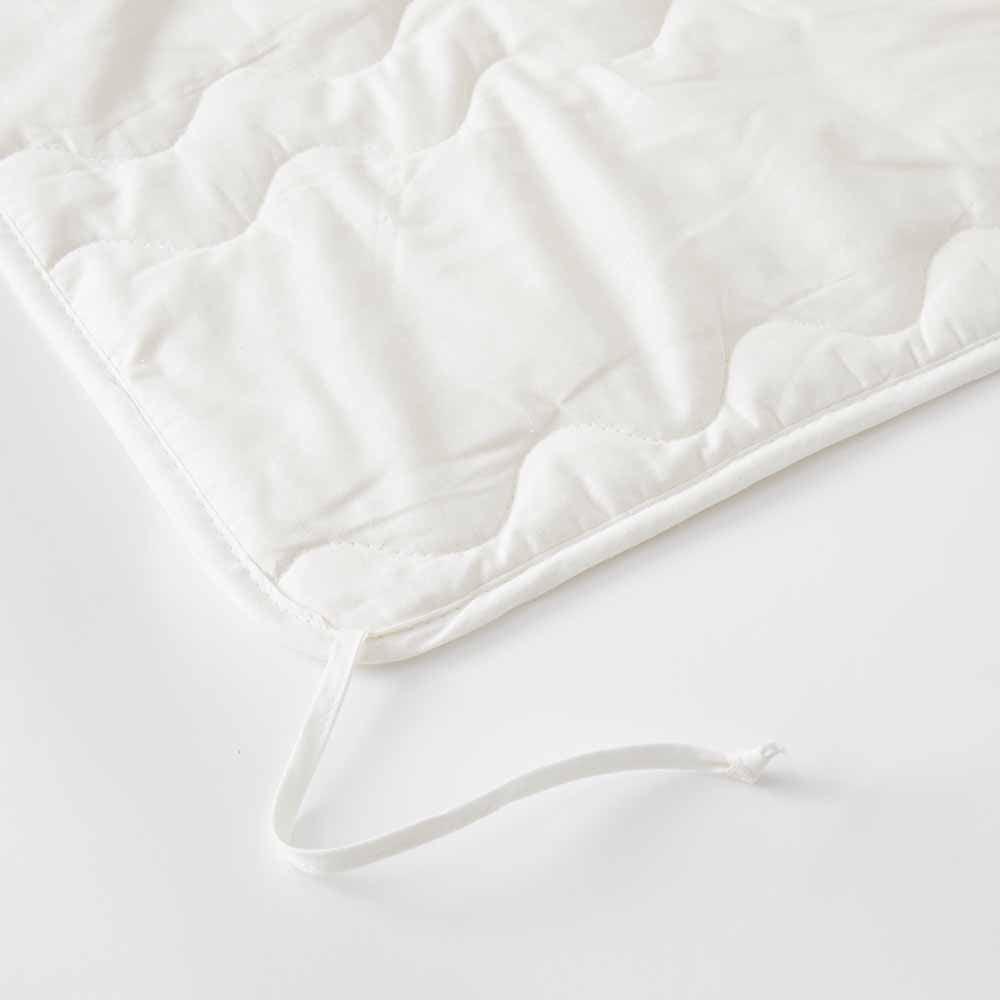
These are two duvets sold together, a "Summer" duvet with a light weight intended for the warm season and a "Mid-season" duvet with a heavier weight, ideal for spring or autumn. Assembled using ties, these two duvets then constitute a warm and cozy “Winter” duvet. You thus save on purchasing the winter duvet which is often the most expensive.


3 - CHOOSE THE FILLING
There are two main families of duvets. The synthetic duvets and the natural duvets.
Today, the synthetic duvets are very widespread because they are generally inexpensive. However, they have several disadvantages:
- synthetic fibers come from petroleum derivatives or polymerized natural materials: they are therefore chemical,
- they often undergo additional antibacterial chemical treatment,
- they absorb little moisture and regulate temperature poorly, which makes you sweat,
- they can cause allergies.
Certain synthetic fibers sold with great marketing and whose brand name is registered, are sometimes disguised as "natural fibers" to be in tune with the times. The sole purpose of these is to be produced at low cost while making you believe that you are buying a natural product. We won't mention any for fear of offending some sensitive industrialists, but you will easily recognize them!
True to our philosophy, we only offer natural duvets or else eco-responsible duvets because they are:
- more respectful of nature,
- softer,
- more comfortable,
- healthier,
- less allergenic.
There are many types of natural duvets whose prices have become quite affordable.
A - COTTON DUVETS
Cotton is a very absorbent and inexpensive material. Cotton duvets therefore have excellent value for money in the "natural duvets". We offer a range of beautiful organic cotton duvets at an unbeatable price.
B - WOOL DUFTS
Wool is a very absorbent and very warm material. Wool duvets are therefore cozy and pleasant. We are now developing a beautiful collection of 100% organic wool duvets.
C - FEATHER, PLUMET AND DOWN DUVETS
There are many types of feathers and down whose properties vary greatly. The more refined and high-quality the filling, the more optimal the thermal comfort.
The down used in the manufacture of our Castex duvets, comforters, pillows and bolsters is new, very fluffy and naturally ventilated. It therefore constitutes a natural anti-mite protection. We therefore chose not to add an acaricide product. Finally, the anti-mite treatment with which some manufacturers imbue their products is justified by the use of renovated and second-hand down and also proves to be ephemeral after a few cleanings.
A specific anti-mite treatment is therefore unnecessary as long as airing your duvet and changing your duvet cover are sufficient.
D - SILK DUVET
Contrary to popular belief, even quality silk duvets are now accessible. Their thermal properties are unrivaled and silk is naturally anti-mite and anti-bacterial. There are again many qualities of silk but also types of manufacturing which influence prices as well as thermal properties.
E - PERFORMANCE OF OUR DUVET BY TYPE OF FILLING
Compare the performance of each duvet by filling type at a glance: the higher the number of stars, the better the performance (on a 5-star scale). Finally, when two types of filling are the same, we tell you which we think is the best choice.
| COMPOSITION | SILK | DOWN | COTTON | WOOL | TAMBOOCELL® |
| I'm looking for a duvet... | |||||
| hot | |||||
| Summer duvets |

|
|
|
|
|
| Mid-season duvets |
|
|
|
|
|
| Winter and 4 season duvets |
|

|
|
|
|
| antiperspirant |
|
||||
| swelling |
|
|
|
|
|
| hypoallergenic |
|
|
|
|
|
| anti-mite |
|
|
|
|
|
| silent |
|
|
|
|
|
| ecological | 100% natural | 100% natural | 100% organic | 100% organic | synthetic |
| easy to maintain | dry cleaning | washable | washable | washable | washable |
4 - CHOOSE THE ENVELOPE
Here too, we advise you to choose a natural envelope and to avoid fiber mixtures.
A - THE MATERIAL
Cotton envelopes are the most common. There are also silk or linen wraps. They are healthy and inexpensive.
B - WEAVING
The most qualitative weaves are cambric, percale, twill or even satin and jacquard.
Pay attention to the thread count of the fabric! The thread count (also called thread count) is expressed in threads/cm². It corresponds to the density of the fabric which will be thick or thin, tight or not.
This ratio is obtained by calculating the number of threads in the warp and weft per cm² of fabric. The higher the number, the tighter the weave and the fabric is durable, soft and quiet. A tight weave will also keep dust out, as all these fabrics allow air to circulate easily.
A fabric with a thread count that is too low will tend to wear or tear more easily and will be much less soft to the touch.
For a beautiful natural duvet, we recommend a cover of at least 100 threads/cm².
Only duvets with a cover of at least 100 threads/cm² and above have been selected for our collection.
C - AESTHETICS
There are different styles of envelopes:
- Plain envelopes,
- Jacquard envelopes (woven patterns),
- Printed envelopes
- Embroidered envelopes...etc.
There are no rules here and no traps either! Whether or not you coordinate your bed linen with the bedroom decor, just let your own tastes guide you. The only objective: the final result must please your eye.
5 - LABELS
The labels will help you make your choice.
Issued by independent organizations, they guarantee the quality, absence of toxic substances, natural composition or origin of the products.
When a product is labeled (Oeko-Tex®, GOTS, Belle Literie... etc.), we clearly mention the label it benefits from, specify the certification body which issues it and explain the meaning and purpose of this label to you.
Adopt the ideal duvet for your nights
Choose from our 4-season models, light or warm, adapted to each season and each need.
Browse the collection
Leave a comment